Growing Celery: Why Most People Fail (And How to Finally Get It Right) 🥬
🗒️Rooted Field Note: 33
If you’ve tried growing celery before, there’s a good chance you walked away thinking you did something wrong.
The seeds barely sprouted. The plants stayed small. Growth felt painfully slow. And at some point, it probably crossed your mind that celery just isn’t worth the effort.
But here’s the truth most guides won’t say clearly enough:
Celery isn’t difficult because it’s complicated. It’s difficult because small mistakes stack up fast.
This is exactly why I started using simple tools to remove the guesswork. Once timing and soil were dialed in, celery stopped feeling frustrating… and started feeling predictable.
The Real Reason Growing Celery Feels So Hard 🧠
Celery exposes every weak point in your setup.
It doesn’t tolerate inconsistent watering. It doesn’t respond well to poor timing. And it doesn’t reward rushed decisions.
Most beginner failures come down to three things:
- Starting seeds at the wrong time
- Using a poor seed-starting mix
- Letting seedlings dry out even once
Fix those three variables, and celery becomes far more manageable.
The Timing Mistake That Ruins Most Celery Crops ⏳
Celery is a long-season crop. That means if your timing is off, everything else becomes harder.
Most gardeners need to start celery seeds 10 to 12 weeks before their last frost date, then transplant outside about 1 to 2 weeks before the last frost.
This is where most people guess… and guessing is where things go sideways.
Instead of counting backward on a calendar and hoping it’s right, I use a tool to do it instantly.
🌱 Use the Plant Timeline Calculator here
Once your timing is correct, celery becomes a completely different experience.
The Soil Problem Nobody Talks About 🧱
If your seed-starting mix is off, celery will let you know.
Too dense? Poor germination.
Too dry? Seeds struggle or fail.
Too wet? You invite mold and weak growth.
Celery needs a mix that holds moisture while still allowing airflow.
This is exactly why I started using a mix calculator instead of guessing ratios.
🧱 Build your seed-starting mix here
When your mix is right, watering becomes easier… and celery becomes far less stressful to grow.
How to Start Celery Seeds Without Killing Them 🌱
Celery seeds are tiny, and they don’t behave like most garden seeds.
They should be surface sown or barely covered, since they need light to germinate. The soil should stay consistently moist—not soaked, not dry.
And then comes the part most people struggle with:
Waiting.
Celery can take two to three weeks to germinate, and early growth is slow. That’s normal.
When your timing and soil are already dialed in, it’s much easier to trust the process instead of second-guessing everything.
How These Tools Actually Help You 🌿
Gardening can get overwhelming fast.
You start looking up one thing, and suddenly you’re juggling frost dates, seed timing, soil mixes, and transplant schedules all at once.
That’s where these tools come in.
- 🌱 The Plant Timeline Calculator removes the guesswork from when to start celery
- 🧱 The Seed Mix Calculator helps you build a mix that actually supports seedlings
- 🌿 Together, they give you a system instead of a guessing game
Instead of asking, “Am I doing this right?”
You start asking, “Did I follow the system?”
That shift changes everything.
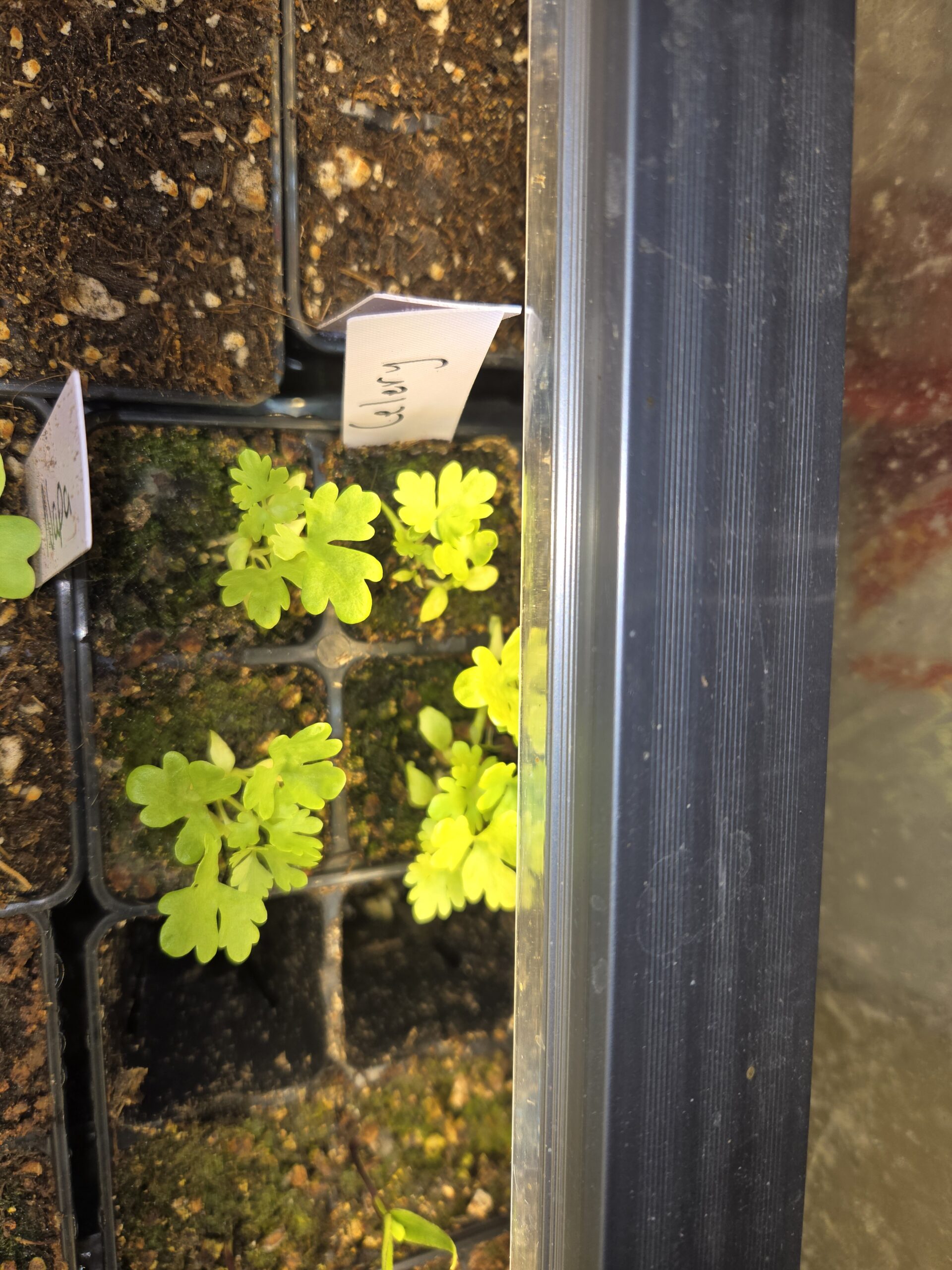
Celery starts slow, but once it gets going, everything changes. This is right around the stage where most people think they messed up.
Struggling to time this stage right? Use the Plant Timeline Calculator to dial it in.
What Happens After Germination 🌞
Once celery sprouts, the goal is consistency.
Steady moisture. Good light. Moderate temperatures. No extreme swings.
Celery doesn’t grow fast early on, but once it establishes, it becomes much more reliable.
This is where patience pays off.
Transplanting Without Stunting Growth 🌤️
Celery can go outside earlier than many warm-season crops, but it still needs to be hardened off.
If you’ve used the timeline calculator, you’ll already know when that window opens.
That removes one of the biggest stress points for beginners—guessing when it’s safe.
The Truth About Growing Celery 🥬
Celery has a reputation for being difficult.
But most of that reputation comes from people starting without a clear system.
When your timing is right and your soil is right, celery stops feeling like a gamble.
It starts feeling repeatable.
Where to Start Today 🚀
If you want to make growing celery easier on yourself, start here:
🌱 Open the Plant Timeline Calculator
🧱 Open the Seed Starting Mix Calculator
Once those two things are dialed in, you’re no longer guessing.
You’re growing with a plan.