Monthly Archives: April 2026
How to Grow Indeterminate Tomatoes (and Actually Keep Up With Them!)
🌱 How to Grow Indeterminate Tomatoes (and Actually Keep Up With Them!)
Rooted Field Note #27
Sun Button Body Butter
A silky, chamomile-kissed body butter inspired by the little “sun buttons” my son spotted in our garden — whipped with shea & mango butters, balanced with arrowroot for a soft, non-greasy finish.
Net Wt. 4 oz (113 g) • Ships from Wisconsin
Why “Sun Button”?
We were weeding the bed when my kiddo pointed at the chamomile — “Look, tiny sun buttons!” That bright, gentle image stuck. So we steep our blooms low & slow, then fold the golden infusion into a velvet whip that feels like sunshine on winter skin.
What you’ll feel ✨
Arrowroot keeps it breathable, not greasy.
A gentle hug for skin that needs soothing.
Shea + mango butters lock in hydration.
Inside the jar 🌿
- Shea Butter (unrefined)
- Mango Butter
- Olive Oil (with house-infused chamomile)
- Arrowroot Powder for slip
No preservatives. No petroleum. No synthetic fragrance.
How we make it
- Slow-infuse dried chamomile in olive oil.
- Melt butters gently, blend with infusion.
- Whip to cloud-light texture; finish with arrowroot.
- Poured in small batches, labeled by hand.
Loved by the Rooted Crew 💛
“Winter elbows? Gone.” • “Calm on contact.” • “It sinks in — no slick.”
Questions, answered 🌼
Is there fragrance?
No synthetic fragrance. Just a light, natural chamomile note from the infusion.
Greasy?
We add arrowroot for a soft, non-greasy finish that absorbs quickly.
How to use?
Massage a small amount into clean skin, especially after bathing or before bed.
Allergens / Safety
For external use only. Patch test first. Discontinue if irritation occurs. Keep away from eyes and children.
Ingredients: Shea Butter, Mango Butter, Olive Oil (Chamomile Infusion), Arrowroot Powder.
Made by: Sprouted Rooted Remedies • Wisconsin, USA
🪴 Why Indeterminate Tomatoes Are the Wild Teenagers of the Garden
If determinate tomatoes are the tidy kids who finish their homework and go to bed on time, indeterminate tomatoes are the teenagers who never stop growing and raid your fridge at midnight. 😅 They keep vining and flowering until frost — which is awesome for long harvests, but it means you’ll want a plan for support, pruning, and steady feeding.
When I first planted them in our backyard, I thought, “How big can they really get?” The answer: big enough to swallow your trellis whole if you’re not ready. Once you learn their rhythm, though, these tomato beasts become the most rewarding part of the garden. 🍅
❓ How Do You Support Indeterminate Tomatoes?
This is the #1 beginner panic moment: you plant a cute seedling, blink, and now it’s eight feet tall, laughing at a flimsy wire cage. Here’s what actually works in a backyard garden:
- Heavy-duty cages — skip the wobbly ones. Look for square, stackable, or welded options that anchor deep.
- Trellis panels — cattle panel between T-posts = rock-solid tomato highway. Zip ties are your friend.
- Single-stake method — one tall stake with soft ties as it grows. Minimal gear; pairs best with pruning.
Dad note: my kid tried to climb our cattle panel like a jungle gym. Verdict: indeterminate tomatoes are sturdier than most playgrounds. 😂
❓ Do You Prune Them?
Short answer: yes. Long answer: yes — but don’t overthink it. Pruning keeps airflow moving (less disease), makes harvest easier, and prevents your yard from turning into a tomato jungle.
- Pinch out suckers (the shoots in the leaf/stem “Y”).
- Remove leaves touching the soil to reduce splash-borne disease.
- Thin dense clumps of foliage that trap moisture.
👉 Check out this rooted pruning guide: “How to Prune a Tomato (Step-by-Step with Real-Life Photo Guide)”.
❓ Can You Grow Indeterminate Tomatoes in Containers?
Yes — but size matters. For indeterminates, think “small tree,” not “houseplant.”
- Minimum 10 gallons; 15–20 gallons is better for steady water and nutrients.
- Use high-quality potting mix (not heavy garden soil).
- Expect to water more often than in-ground plants.
Fabric grow bags help keep roots cooler and drain beautifully. At season’s end, they fold flat — tiny storage win.
❓ How Often Do You Fertilize?
I keep it super simple. At planting time, I work in MIgardener’s Fertilizer just once to give the seedlings a good kickstart. After that, I don’t rely on store-bought fertilizer anymore — it’s all about the teas. ☕🌱
Here’s what I rotate through every couple of weeks:
- Compost tea — homemade from finished compost; it’s like a vitamin boost for the soil life.
- Seaweed tea — packed with micronutrients; keeps plants strong and resilient.
- Comfrey tea — my secret weapon, loaded with potassium to keep the fruiting nonstop.
The cool part? I make all these teas myself from what I already have in the homestead. It’s cheap, sustainable, and the plants absolutely thrive on it. Honestly, the tomatoes taste even better when they’re raised on homemade goodness. 🍅💪
❓ Best Beginner-Friendly Indeterminate Varieties
These come up again and again from growers (and they’ve earned a permanent spot in my beds):
- Cherokee Purple — deep, smoky slicer with a cult following.
- Sun Gold — candy-sweet orange cherries kids (and adults) inhale.
- Early Girl — dependable early producer; forgiving in funky weather.
- Better Boy — classic backyard workhorse, heavy yields, balanced flavor.
❓ How Do You Prevent Leggy Plants & Disease?
Leggy seedlings: usually low light. If they’re already tall and floppy, plant them deep and sideways in a shallow trench — tomatoes root along buried stems like champs.
Disease prevention (simple backyard rules):
- Space 2–3 ft between plants for airflow.
- Prune lower leaves and crowded clusters.
- Mulch with straw/wood chips to stop soil splash and keep moisture even.
- Water at the base in the morning; avoid wetting leaves.
- Rotate beds yearly if possible.
❓ How Long Do Indeterminate Tomatoes Produce?
As long as the weather allows. They don’t clock out after one big flush — they keep flowering/fruiting until frost. In our Wisconsin backyard (Zone 5), that’s typically late July through first hard frost (often October). In warmer regions, you can harvest much longer.
Quick Start Checklist ✅
- Plant deep; bury 1/3–1/2 of the stem.
- Install real support on day one (cage/trellis/stake).
- Mulch and water at the base to keep leaves dry.
- Feed lightly but consistently every 2–3 weeks.
- Prune for airflow and sanity.
Wrap-Up
Indeterminate tomatoes will test your patience, climb higher than you planned, and occasionally humble your trellis — then repay you with armloads of fruit. Learn their rhythm and they’ll be the heart of your backyard harvest.
👉 Next time: the biggest pruning mistakes beginners make (and how I learned the hard way).
More for you:
Container Tomatoes Guide •
Organic Fertilizer 101 •
Hornworm Prevention
👉 Ready to Root Deeper Into Homesteading?
Learn how to grow food, craft natural remedies, and build a homestead life with people who actually get it.
Inside the Sprouted Rooted Remedies Skool, you’ll not only connect & learn — you can win prizes 🎁 and earn cash 💸 when you invite friends through our affiliate program.
Free for the first pioneers. Be part of The Rooted Crew. 🌻
How to Plant Chamomile Seeds the Easy Way (Beginner Jug Method That Actually Works)
How to Plant Chamomile Seeds the Easy Way (Beginner Jug Method That Actually Works)🌼
…No grow lights. No trays. No expensive setup. Just one jug and nature doing the work.
🗒️Rooted Field Note: 39
Most people overcomplicate starting chamomile from seed.
They assume they need grow lights, expensive trays, shelves full of supplies, timers, heating mats, and a spare room dedicated to seedlings.
And sure… those setups can work.
But sometimes the best gardening methods are the ones that feel almost too simple to be true.
That’s exactly how I planted my chamomile seeds this season.
No grow room.
No expensive setup.
No constant babysitting.
I used an old gallon water jug, some soil, and let nature do the work.
And honestly?
It worked beautifully.
If you’ve been wondering how to plant chamomile seeds without spending money or stressing yourself out, this may be one of the easiest methods you’ll ever try.
🌱 Why More Gardeners Are Growing Chamomile
Chamomile is one of those plants that gives back more than it asks for.
It’s beautiful in the garden.
It attracts pollinators.
It can be dried for tea.
It smells wonderful.
And it brings a calm, peaceful feeling to the growing space that’s hard to explain until you’ve experienced it yourself.
Some plants feed the body.
Chamomile feels like it feeds the spirit too.
That’s why I wanted more of it this year.
So instead of making the process complicated…
I grabbed an empty gallon jug.
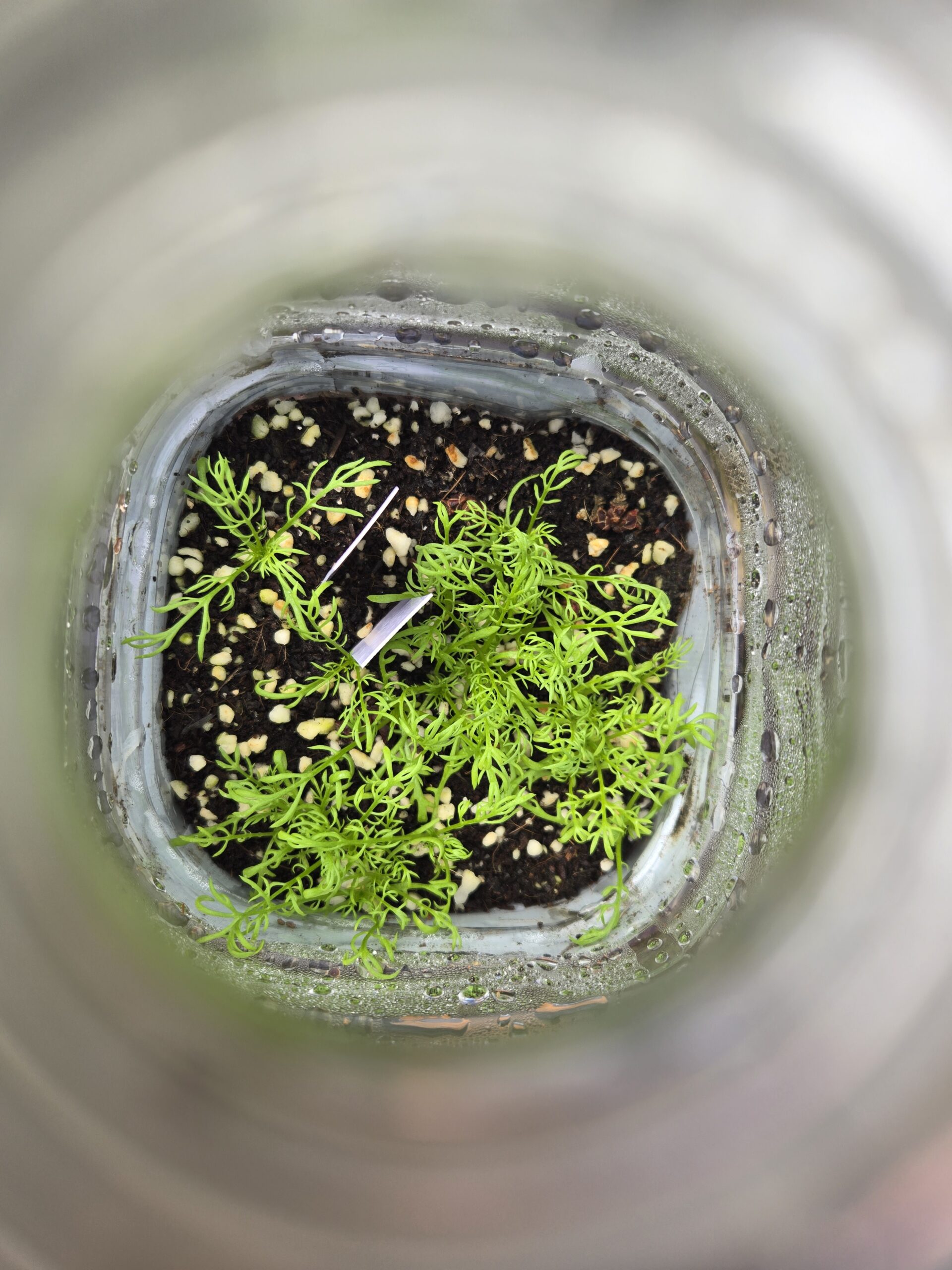
My chamomile seeds started the easy way — in an old gallon jug outdoors.
🥛 The Gallon Jug Method (One of the Easiest Ways to Start Seeds)
If you’ve never tried this method before, it’s beginner gold.
Here’s exactly what I did:
Step 1: Cut Open the Jug
I took a clean gallon water jug and cut it almost all the way around, leaving one side attached like a hinge.
This allows it to open and close easily.
Step 2: Add Soil
I filled the bottom with moist seed-starting mix.
Not soaking wet.
Just lightly damp.
Step 3: Sow the Seeds
Chamomile seeds are tiny, so I sprinkled them gently across the surface.
Then I lightly pressed them into the top of the soil.
Step 4: Close It Up
I taped the jug closed.
Then I left the cap off the top for airflow.
Step 5: Put It Outside
That’s it.
I placed it outdoors and let the weather do the rest.
No grow lights.
No moving trays around the house.
No daily stress.
🌞 Why This Method Works So Well
The gallon jug acts like a miniature greenhouse.
During the day:
☀️ Sun warms the inside
At night:
❄️ Cool temperatures help harden seedlings naturally
When it rains or snows:
💧 Moisture and humidity regulate conditions
The plastic protects young seedlings from wind and rough weather while still exposing them to natural seasonal changes.
That means when your plants sprout, they’re often sturdier and more ready for real garden life than soft indoor seedlings.
Less stress for you.
Better transition for them.
⚠️ The Biggest Mistake People Make With Chamomile Seeds
Most beginners bury chamomile seeds too deep.
That simple mistake can stop germination entirely.
Chamomile seeds prefer light to germinate.
So instead of planting them deep like beans or peas…
Simply press them onto the surface of the soil.
That tiny detail can save weeks of frustration.
Sometimes success in gardening comes from small adjustments, not giant changes.
🌱 How Long Chamomile Seeds Take to Germinate
Chamomile usually germinates in 7 to 14 days, depending on temperature and moisture.
In outdoor jug setups, timing can vary because nature decides the schedule.
That’s one of the hidden benefits of this method:
The seeds wake up when conditions are truly right.
Not when we force them.
And every time I see those first little green sprouts inside an old plastic jug…
It feels like magic.
Tiny life growing inside something most people would have thrown away.
That never gets old.
🌼 German Chamomile vs Roman Chamomile (Which Should You Grow?)
Not all chamomile is the same.
German Chamomile
Best choice for:
🍵 Tea
🌼 Lots of blooms
🌱 Fast annual growth
This is the classic tea chamomile most people want.
Roman Chamomile
Best choice for:
🌿 Ground cover
🌸 Low-growing beauty
🌱 Perennial option in some climates
If your dream is harvesting flowers for homemade tea…
German chamomile is usually the better pick.
🧪 Want Better Germination Rates? Soil Matters More Than People Think
Many people assume bad sprouts mean bad seeds.
Usually it’s the growing medium.
Too dense = poor airflow
Too wet = rot
Too dry = stalled germination
That’s exactly why we built the Seedling Mix Calculator inside our gardening tools.
It helps you quickly build a stronger seed-starting mix using ingredients like:
✔ Coco coir or peat
✔ Perlite
✔ Worm castings
No guessing.
No wasting bags of materials.
No random YouTube recipes.
👉 Use the tool here: Seed Mix Calculator
If you want healthier starts this season, it saves a lot of trial and error.
🌱 What Happens After Sprouting Matters Even More
Many beginners succeed at germination…
Then lose the plants afterward.
Usually because of:
❌ Transplanting too early
❌ Roots overcrowding containers
❌ Poor outdoor timing
❌ Weak soil prep
❌ Watering mistakes
This is where many people get frustrated and quit.
But it doesn’t have to be hard when you know what to watch for.
🌻 Grow With Us Inside the Skool Community
If you’re tired of figuring everything out alone…
Come join us inside the Skool community.
This is where growers help growers.
Inside, we share:
🌱 What we’re planting right now
🌱 Seasonal timing tips
🌱 What’s actually working
🌱 Honest failures too
🌱 Beginner-friendly support
🌱 Gardening tools & calculators
🌱 Motivation to keep going
Because sometimes what people need isn’t more random information…
They need the right people around them.
👉 Join the community here: https://www.skool.com/garden-4952/about
Whether you’re starting your first seed or building a serious garden, you’re welcome here.
🌿 Where to Plant Chamomile After Transplanting
Once seedlings are ready, chamomile generally likes:
☀️ Full sun to partial sun
🌱 Well-drained soil
💧 Moderate watering
🌬️ Good airflow
I love planting it near vegetable beds, herb gardens, walkways, or anywhere I want flowers with purpose.
It looks beautiful and earns its space.
🛒 Helpful Tools That Make Growing Easier
You don’t need much.
But these help:
🌱 Chamomile seeds
🌱 Spray mister
🌱 Garden snips
🌱 Drying rack for flowers
🌱 Airtight jars for tea storage
🌱 Soil calculators and planning tools
Simple tools beat complicated systems.
🌼 Final Truth
You do not need a fancy setup to grow something beautiful.
Sometimes all you need is:
An old water jug
A little soil
A handful of seeds
And the right people to learn beside
Start with one seed.
Then keep going.
We’ll help with the rest.
👉 Use the tools: Seed Soil Mix
👉 Join the Skool community: https://www.skool.com/garden-4952/about
🌱 One More Thought
Gardening gets easier when you stop trying to know everything before starting.
Plant first.
Learn as you grow.
That’s how real gardens are built.
Growing Calendula for Beginners: The Simple Method That Actually Worked
Growing Calendula for Beginners: The Simple Method That Actually Worked🌼
…Bright blooms, bees, herbal uses, and one of the easiest flowers I’ve ever grown.
🗒️Rooted Field Note: 38
Most people overcomplicate gardening.
Fancy lights. Expensive trays. Complicated systems.
Meanwhile… one of the best flowers in my garden got its start in an old gallon jug sitting outside.
That flower is calendula.
And if you’ve never grown anything before, this might be one of the smartest places to begin.
Because calendula gives back far more than it asks for.
Bright blooms.
Bees love it.
Petals for salves.
Tea blends.
Skin care.
Homemade gifts.
Color in the garden.
All from one humble seed.
🥛 How I Started Calendula Early
This season, I used the same method I rely on for a lot of hardy plants:
The milk jug method.
Some people call it winter sowing. I call it simple.
I took an empty gallon water jug, cut it around the middle, poked drainage holes in the bottom, and filled it with seed-starting mix.
Then I sprinkled in calendula seeds, lightly covered them with soil, watered everything in, taped the jug shut, and set it outside.
That’s it.
No grow lights.
No heat mats.
No trays taking over the kitchen table.
No babysitting seedlings every day.
The jug acts like a tiny greenhouse—catching sunlight, holding moisture, and protecting young plants from rough weather.
Nature handles more than people realize.
🌱 Why Calendula Earns Its Space
Some flowers are pretty.
Some plants are useful.
Calendula is both.
That earns space in my garden every year.
🌼 Bright orange and golden blooms
🐝 Pollinators notice it fast
🧴 Great for infused oils and salves
🍵 Petals can be dried for tea blends
🌿 Beginner friendly and forgiving
✂️ Blooms longer when harvested often
The first year I grew calendula, I didn’t really know what I was doing.
It still thrived.
That told me everything I needed to know.
📍 Where to Plant Calendula
Once seedlings are sturdy and weather settles down, I transplant them into the garden.
Calendula likes full sun, but if your summers get intense, a little afternoon shade can help.
I love planting it near vegetables.
The bees find it quickly, and the whole space feels more alive.
That matters more than people think.
A productive garden should also feel good to walk through.
💧 What I’ve Learned Growing Calendula
Calendula doesn’t need perfection.
It needs a fair shot.
Give it:
- Decent soil
- Sunlight
- Water when dry
- Room to breathe
Deadhead old blooms for more flowers.
Harvest often if you want petals.
And don’t overthink it.
A lot of people struggle because they complicate easy things.
Calendula rewards relaxed gardeners.
🧠 If You’re New, Use the Tools
When I first started gardening, I wasted time guessing everything.
When to plant.
What soil to use.
What comes next.
Why something failed.
That’s exactly why I built the tools I wish I had back then.
Inside our growing system, you can use:
🗓️ Planting Timeline Calculator
🪴 Seed Starting Mix Calculator
🌱 Bed Planning Tools – coming soon
📍 Frost Date Resources
🧴 Herbal & Salve Tools
Because guessing gets expensive in gardening.
🌿 Why I Built The Rooted Community
A lot of people want to grow something.
But they’re doing it alone.

That’s the hard part nobody talks about.
Seeds are easy to buy.
Encouragement is harder to find.
Real answers are harder to find.
Motivation after failure is harder to find.
That’s why I built The Rooted community.
Inside, people are learning together.
Sharing progress.
Asking questions.
Showing wins.
Showing failures.
Building real gardens and better lives.
No fake perfection.
Just real people growing forward.
🔥 If I Were Starting Calendula Today
I’d do exactly what I did this season.
Grab a gallon jug.
Add soil.
Drop in seeds.
Set it outside.
Then let nature do more of the work than most people realize.
Simple methods win more often than complicated ones.
🌼 Final Thought
Growing calendula isn’t just about flowers.
It’s about creating something useful, beautiful, and alive from a tiny seed.
It’s proof that small beginnings become real things.
And if you’re tired of figuring it all out alone…
You don’t have to anymore.
🌱 Come grow with us inside The Rooted.
🔗 Helpful Next Stops
👉 Try the Planting Timeline Tool
👉 Use the Seed Starting Mix Calculator
👉 Join The Rooted Community
👉 Learn How to Make Calendula Salves & Oils
How to Grow Spinach from Seed the Easy Way (No Lights, No Stress, Just Results)
How to Grow Spinach from Seed the Easy Way (No Lights, No Stress, Just Results)

…🗒️Rooted Field Note: 37
❄️ I Planted Spinach in the Snow… and It Didn’t Care
I remember standing there in February, breath hanging in the air, snow still packed around the edges of the yard… and I’m holding a cut-up milk jug like I’ve finally lost it 😅
My son’s inside, probably thinking I’m doing something important.
Truth is… I just didn’t want to wait anymore.
So I filled that jug with soil, sprinkled in spinach seeds, snapped the lid shut, and set it right outside in the cold.
No lights.
No heat mats.
No perfect timing.
And if you’re being honest with yourself… you’ve probably been there too. That point where you want to grow something, but everything online makes it feel like you need a full setup just to start.
Here’s what surprised me the most:
Spinach didn’t just survive that… it preferred it.
🌱 Why Growing Spinach from Seed Feels So Hard (Until It Doesn’t)
Spinach has this reputation of being “easy,” but that’s only half the truth.
It’s easy… if you stop trying to grow it like everything else.
Most of us bring seeds inside, crank the heat, baby them under lights, and then wonder why spinach refuses to cooperate. It sits there, patchy, uneven, or just never shows up at all.
And when it does grow?
The second things warm up, it bolts like it’s trying to escape you.
That’s the part nobody really says out loud:
Spinach is a cold crop pretending to be difficult.
Once I stopped fighting that… everything got simpler.
🥛 The Milk Jug Wasn’t a Hack… It Was a Reset
That milk jug wasn’t some clever trick I found scrolling late at night.
It ended up being something better—a way to step back and let nature handle the parts I was overcomplicating.
I cut it open just enough to create a little hinge. Not perfect. Not measured. Just enough so it could open and close. Poked a few holes in the bottom with whatever I had nearby, filled it with soil, and gave it a good soak before adding seeds.
That soil mattered more than I expected.
Not in a complicated way… just in the sense that it needed to breathe. Spinach doesn’t like being trapped in heavy dirt. It wants something light enough to push through but still hold onto moisture.
👉 [ Seed Starting Mix Calculator + My Exact Blend]
(This is the same mix I use when I don’t want to guess and risk losing a tray of seedlings.)
After that, I sprinkled seeds across the surface. No ruler. No spacing grid. Just a natural scatter, like you’d toss seed in the wild. A light dusting of soil on top, and that was it.
Then I closed the jug… and walked away.
🧊 The Waiting Is the Hardest Part (And the Most Important)
Nothing happens at first.
That’s where most people give up.
You check it.
Then check it again.
Then start thinking maybe you did something wrong.
But inside that jug, something’s happening you can’t see yet. The temperature shifts. The moisture cycles. The seeds are doing exactly what they’re supposed to do—waiting for the right moment.
And that’s the part I think hits deeper than gardening.
Because we’re not good at waiting anymore.
We want signs right away. Growth right away. Proof that we didn’t mess it up.
But spinach doesn’t care about your timeline.
It waits… and then one day, it shows you.
🌞 The First Sprouts Change Everything
The first time I saw those tiny green leaves pushing up through the soil, it felt different than starting seeds inside.
They weren’t weak.
They weren’t reaching for light.
They weren’t struggling.
They looked like they belonged there.
Because they did.
No hardening off.
No transplant shock waiting around the corner.
No guessing if they’re ready for the outside.
They were already part of it.
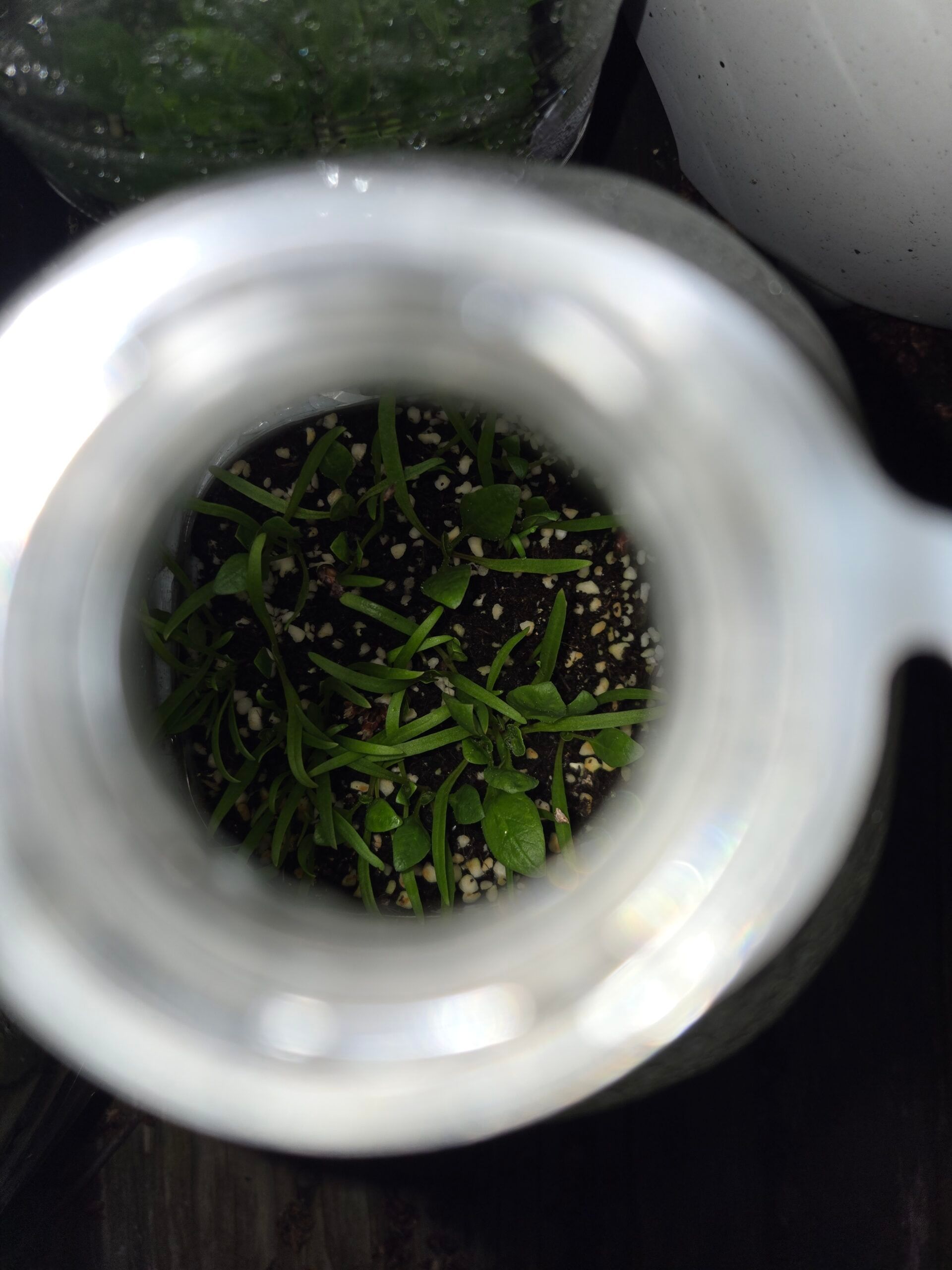
I planted spinach seeds in a recycled milk jug in February and let nature do the work. This simple winter sowing method makes growing spinach from seed easy. 🌱
🌿 Letting Go of Control (Just Enough)
As the days started warming up, I noticed condensation building inside the jug. Little drops forming, running down the plastic, keeping everything alive without me touching it.
That’s when I started opening it a bit during the day. Not on a schedule… just when it felt right.
🥗 Harvest Feels Different When You Didn’t Force It
When the leaves got big enough to pick, I didn’t pull the whole plant. I just took what I needed and left the rest.
And it kept growing.
That’s when it really clicked for me—this wasn’t just about growing spinach from seed.
It was about building something that keeps giving instead of something you have to restart over and over again.
😅 If You’re Just Starting… Read This
If you’ve never grown anything before, or you’ve tried and it didn’t work… this is one of those places I’d point you to without overthinking it.
You don’t need the perfect setup.
You don’t need to understand everything.
You just need to start.
And if it doesn’t work?
You lost a milk jug and a handful of seeds.
That’s a pretty low price for learning something real.
🌱 Where This Leads
This one little experiment opened the door for a lot more. Cold crops, winter sowing, letting nature handle the heavy lifting instead of trying to recreate it indoors.
And I’ll be tying this back into soil too—because that’s honestly where most success comes from.
👉 Don’t forget to check the Seed Starting Mix Calculator when you want to dial that in without wasting time.
🪴 Final Thought From the Homestead
That milk jug sitting out in the snow didn’t look like much.
But it reminded me of something I think we all need to hear a little more often:
Growth doesn’t need perfect conditions.
It just needs the right environment… and a little patience.
And sometimes, the best thing we can do is stop trying to force it… and let it happen.
What the Broccoli Sprout Research Made Me Do at Home
What the Broccoli Sprout Research Made Me Do at Home
There was a point where I started looking at food a little differently…
🗒️Rooted Field Note: 36
Not just as something to fill a plate… but as something that might actually help us handle the world we’re living in.
Because let’s be honest — we’re surrounded by things our bodies were never exactly designed to deal with. Plastics. Pollution. Chemical exposure. The kind of junk that quietly piles up in the background while we’re just trying to live our lives and feed our families.
And once I started reading more about broccoli sprouts, I kept coming back to the same thought:
If I can grow something this simple on my counter that may help support the body’s own detox pathways… why wouldn’t I?
That’s what sent me down the broccoli sprout rabbit hole.
🌱 Why I Started Paying Attention to Broccoli Sprouts
What caught my attention wasn’t hype. It wasn’t some trendy wellness claim floating around online.
It was the fact that researchers have actually studied compounds from broccoli sprouts in relation to the body’s detox systems.
The big compound people talk about is sulforaphane, which comes from broccoli sprouts and is tied to the plant’s natural protective compounds. Broccoli sprouts are especially interesting because they can contain a lot more of the precursor compounds than mature broccoli.
That doesn’t mean broccoli sprouts are magic. And it definitely doesn’t mean I’m claiming they somehow vacuum plastic particles out of the human body.
But it does mean they may help support the body’s own detox machinery, which is exactly why I thought this was worth turning into something practical for people.
🧪 What the Research Pushed Me Toward
Once I started reading the research, I realized something pretty fast:
Even when the science is interesting, most normal people are still left wondering what they’re actually supposed to do with it.
That’s the gap I wanted to close.
I didn’t want to just talk about broccoli sprouts in some vague “healthy superfood” way.
I wanted to create something that helped answer the real questions:
- How much should I actually plan to grow?
- How many seeds would I need?
- What if I’m growing for more than one person?
- What if I’m trying to keep a steady daily habit going instead of just eating a random handful once in a while?
That’s why I made the calculator.
Not because I think a calculator can magically measure your exact sprouts.
It can’t.
But it can give you a practical planning tool based on research-inspired numbers, and for me that felt a whole lot more useful than just saying, “Yeah… maybe eat some sprouts.”
⚠️ The Honest Part: This Is an Estimate
This part matters, and I wanted to be very clear about it inside the calculator too.
There is no way for the calculator to know the exact amount of beneficial compounds in your particular batch of sprouts.
Seed genetics matter. Growing conditions matter. Sprout age matters. Handling matters.
So instead of pretending there’s one exact, magical number, I built the calculator around a nominal range.
That means it gives you a practical estimate — not a lab test.
To me, that’s the honest way to do it.
🥗 Why I Wanted This to Be Useful for Real Families
One thing I didn’t want was a tool that only made sense for one perfect adult eating one perfect serving in one perfect wellness fantasy kitchen.
That’s not how life works around here.
Sometimes you’re growing for yourself.
Sometimes you’re growing for your whole household.
Sometimes you’ve got children involved too, and you’re trying to think through what makes sense for real people and real portions.
So I built the planner to account for:
- Adults
- Children
- Days of planning
- Estimated fresh sprout amount
- Estimated seed amount
- A broader planning range so people can see what “weaker” or “stronger” sprouts might change
That’s the kind of thing I would want if I were trying to actually use this in my own kitchen instead of just reading about it and moving on.
🌿 How to Grow Broccoli Sprouts at Home
🧰 What You Need
- 🥦 Broccoli sprouting seeds
- 🫙Mason jars (or any clean glass jar)
- 🧵 A mesh lid, sprouting lid, or even a cloth + rubber band
- 💧 Clean water
🌊 Step 1: Soak the Seeds
🚿 Step 2: Drain and Rinse
🌬️ Step 3: Let Them Breathe
- lets excess water drain out
- allows air to move through the sprouts
🔁 Step 4: Rinse Daily
- fill the jar with water
- swirl it around
- drain it completely
🌿 Step 5: Watch Them Grow
☀️ Optional Step: Add Light at the End
🥗 Step 6: Eat and Restart
- salads
- sandwiches
- eggs
- or just eat them straight
📏 Why the Calculator Matters More Than Just Guessing
I know some people will just toss seeds in a jar and wing it.
And honestly, if that gets them started, I’m not mad about it.
But for the people who want something a little more intentional, the calculator is there to help bridge that gap.
It helps answer things like:
- How much should I plan per adult?
- How much might make sense per child?
- How many seeds would I need for a week?
- What might I want to buy for a full month if I’m trying to stay consistent?
To me, that’s where this becomes useful.
It turns broccoli sprouts from a neat idea into something you can actually plan around.
🫙 The Countertop Part Is My Favorite Part
I love garden projects. I love big plans. I love building things out over time.
But I also really love the small wins.
Broccoli sprouts feel like one of those small wins.
A jar on the counter.
A few rinses a day.
A little bit of intention.
And suddenly you’re growing something fresh, living, and genuinely useful right in the middle of everyday life.
That’s the kind of thing I always want more of around here.
🧠 Why I Made This for the Reader
I made this calculator because I didn’t want people to get excited about broccoli sprouts, search around for five minutes, and then give up because nobody translated the research into something usable.
I wanted to make it easier for somebody to say:
“Okay… this makes sense. I can actually do this.”
That’s really the heart of it.
I’m not trying to make this feel mysterious.
I’m trying to make it feel possible.
👇 Try the Broccoli Sprout Planner
If you want help figuring out how much to grow for yourself, your kids, or your whole household, I made the planner for exactly that.
Use the calculator below to estimate:
- daily fresh sprout amounts
- weekly planning totals
- seed amounts
- kitchen-friendly seed estimates
- 30-day buying estimates
Countertop planning sheet
🥦 Broccoli Sprout Research Planner
I made this to turn the broccoli sprout research into something a real person can actually use. Instead of leaving you guessing, this planner helps estimate how many fresh sprouts and how many seeds you may want to grow for a steady daily routine.
🥗 Balanced adult daily target
🧒 Balanced child daily target
📏 Nominal adult range
👨👩👧👦 Household daily amount
📦 Total sprouts for this cycle
🌱 Balanced seed estimate
🌿 Nominal seed range
🥄 Balanced seed amount per day
🥄 Seed amount per day (tablespoons)
🫙 Jar planning hint
🛒 30-day seed buying estimate
📝 Printed Planner Note
🌿 Join the Rooted Crew
🔬 Research Links I Used While Building This
If you like seeing where this stuff comes from, here are the studies and research pages I used as part of the thinking behind this project:
- Clinical trial on broccoli sprout beverage and detoxification of airborne pollutants
- PubMed version of the broccoli sprout detox study
- Dose-dependent broccoli sprout beverage study
- Study on sulforaphane bioavailability from broccoli sprouts
- Review discussing glucoraphanin variability in broccoli sprouts
🌻 Final Thought
I like tools that help people do something real.
That’s what this one is for.
Not perfection.
Not pretending we can measure every molecule in a jar on the counter.
Just a practical way to grow something useful, plan it better, and make the whole thing easier to stick with.
And honestly, that’s the kind of help I’m always trying to build around here.
What Is a Sweet Potato Slip? (Simple Explanation for Beginners)
What Is a Sweet Potato Slip? (Simple Explanation for Beginners 🥔🌱)
🗒️Rooted Field Note: 35
🌿 What Is a Sweet Potato Slip?
👉 rooting those slips
👉 planting them in warm soil
🌱 Where Do Slips Come From?
- Grow into vines 🌿
- Develop leaves 💚
- Can be removed and used as slips
✂️ What Makes Something a “Slip”?
- It has a section of vine
- It has leaves
- It can be removed from the sweet potato
💧 What Happens After You Remove a Slip?
- It is placed in water
- Roots begin forming from the stem
- It becomes a self-sustaining plant
☀️ When Is a Slip Ready to Plant?
- Roots are visible and growing
- The plant looks stable and healthy
- Outdoor conditions are warm (no frost risk)
🌡️ Why Temperature Matters
- Cold soil slows or stops growth ❄️
- Warm soil encourages rapid growth 🔥
👉 soil temperatures reach about 65°F or higher
🔄 How Many Slips Can One Sweet Potato Produce?
- 10+ slips from a single potato
- Sometimes much more depending on conditions
🌿 Why Slips Are Important
- Allow you to multiply plants easily
- Provide a strong, established start
- Reduce the need to buy plants
🧭 Want Help With Timing?
🌱 Simple Way to Think About It
👉 not a root
👉 not a cutting from another plant
Growing Sweet Potato Slips in a Jar (and Why I Let Mine Go Completely Wild)
Growing Sweet Potato Slips in a Jar (and Why I Let Mine Go Completely Wild 🥔🔥🌿)
🗒️Rooted Field Note: 34
🌿 What Are Sweet Potato Slips?
Sweet potato slips are vine cuttings that grow from a sweet potato and can be rooted and planted to grow new plants.
Instead of planting seeds, growing sweet potato slips means taking these shoots, rooting them in water, and then planting them in warm soil once they’re established.
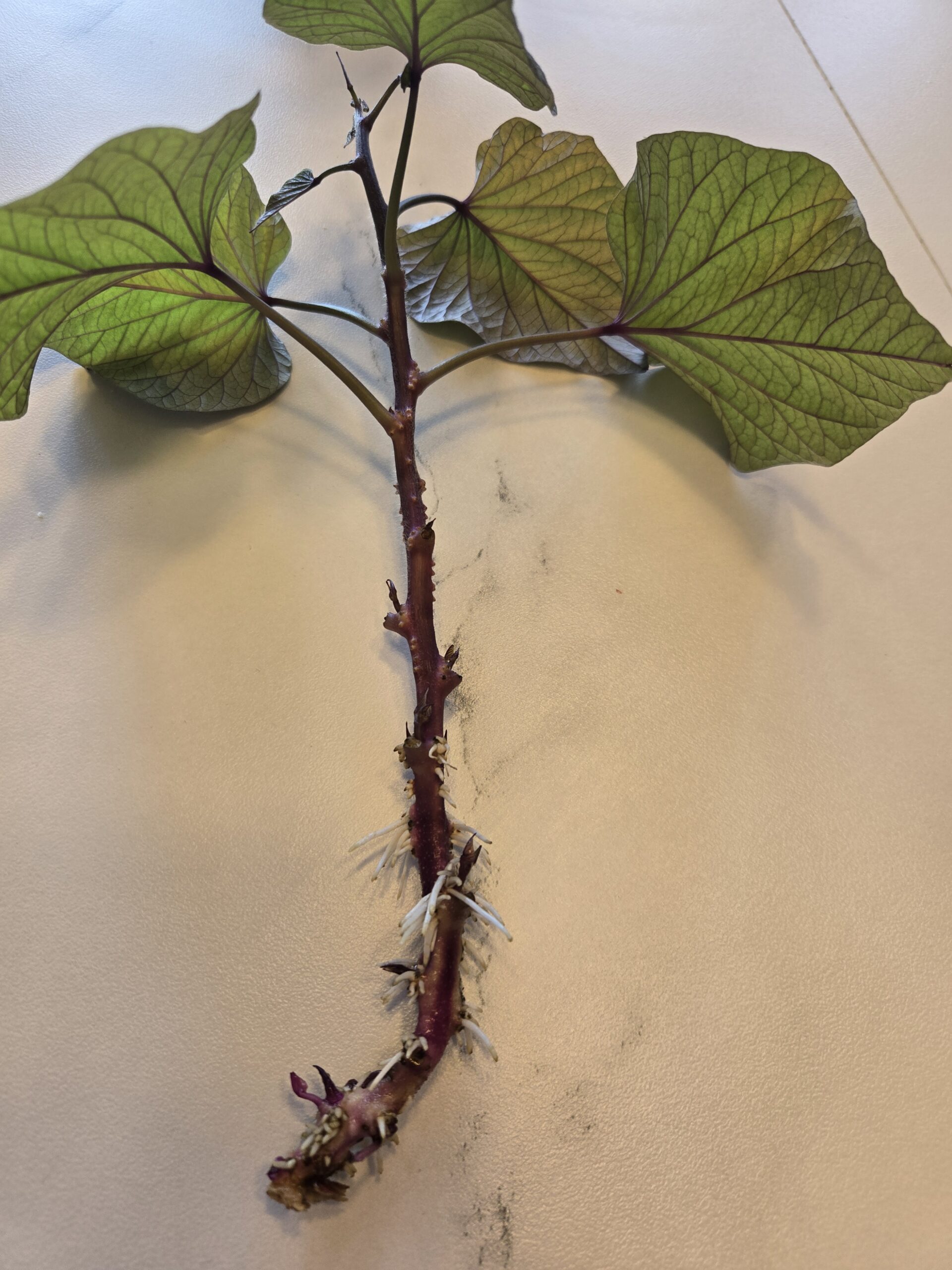
A rooted sweet potato slip starting to form strong roots before going into soil 🌱
I never set out to grow sweet potato slips by the book.
My mission was simple: grow as many as possible 😄
That was the whole goal.
Forget those tidy, postcard-perfect slips posing in a jar like seed packet models. I wanted chaos instead🌿🔥 I wanted vines to climb, leaves to pile up, and a wild tangle of slips overflowing by planting time.
Because every time I’ve tried to keep things neat in the garden… I end up wishing I had just let it run a little wilder 😅
So that’s what I did.
And if you’re here, you’re probably thinking about trying this, or maybe you already have a potato sitting in a jar and are wondering if you’ve accidentally started a science experiment 🧪🥔
Either way, you’re in the right place 👍
At the beginning, it feels like nothing is happening.
You set the sweet potato in water, maybe prop it up a little, maybe not, and then you wait… and wait just a little longer than you expected ⏳
The jar sits there, almost too quiet. Suspiciously quiet 🤨
But then something shifts.
A tiny bump appears. Then another. Suddenly, a vine stretches out, testing the air as if it’s waking up to possibility 🌱
And before you know it, that one potato starts acting like it has something to prove 💪
That’s the moment I stopped thinking, “Is this working?”
and started thinking…
👉 “How far can this actually go?” 🔥
And that question changed everything.
Because once that first vine stretched out, it didn’t stop.
It kept reaching.
Then another one joined it.
Then another.
Suddenly, the jar no longer feels like just a container. It starts to feel like a launchpad 🚀
There’s a moment when you realize you’re not just growing a plant…
You’re watching something multiply.
Not fast like weeds.
Not slow like seeds.
Something in between… something deliberate 🌿
The vines start overlapping.
Leaves stack on top of each other.
New growth shows up before you even decide what to do with the old growth.
And instead of stepping in to manage it, I stepped back.
I let it build.
Because every time I reached toward the jar, I noticed something.
Where one vine grew, two more weren’t far behind.
Where a leaf formed, a new shoot wasn’t far underneath it.
It felt less like something fragile, and more like something that wanted to expand 🌱🔥
So instead of thinking, “When should I take slips?”
I started thinking…
👉 “What happens if I wait just a little longer?”
And the answer was always the same.
More.
More vines.
More growth.
More chances.
When I finally did start pulling slips off, it didn’t feel like cutting something back.
It felt like I was harvesting pure potential ✂️🌿
Each piece I took had already lived part of its life attached to that potato.
Already stretched.
Already proven it wants to grow.
And now it was getting a chance to become something on its own.
I dropped those slips into water, starting the whole adventure over again, only this time on a smaller scale. 💧
And just like before, they adjusted.
Then they rooted.
Watching roots form teaches a whole new kind of patience.
Because this time, the growth isn’t reaching outward, it’s anchoring down 🌱
Little white roots push out, almost as if the plant is deciding, “Yeah… I’m staying.”
And once that happens, everything changes again.
Because now it’s not just a cutting.
Now it’s a plant.
That’s when I move them into soil.
Not because the calendar says so.
Not because a guide says “day 10.”
But because they look ready 👀
And when they hit soil, that’s when I finally start giving them more direct sunlight through the window ☀️
Not as a shock.
Not as a jump.
Just another step forward.
Before moving them fully outside, I ease them into it. (Hardening Off Phase)
I’ll set them outside for a little while at first, then bring them back in. Then a little longer the next day. Just letting them get used to real sun, real air, and the outside world gradually 🌤️
That transition matters more than it seems. It’s the difference between a plant that struggles… and a plant that takes off once it hits the ground 🌱🔥
If you don’t have that kind of window light, grow lights step into that role easily 💡
Nothing complicated.
Just steady light, somewhere in that 12 to 16 hour range, and they’ll keep moving forward like they were always meant to.
At some point during all of this, the question of “am I doing it right?” just disappears.
Because the plant answers it for you.
It grows 🌱
That’s it.
And once you see that, really see it, you stop trying to control every part of the process.
You start paying attention instead.
You notice when something is ready.
You notice when something wants more time.
You notice when something is about to take off.
And that’s when this stops feeling like a method, and starts to feel like a rhythm you can move with. 🔄🌿
By the time planting season gets close, I’m not counting slips.
I’m looking at options.
Which ones look strongest.
Which ones I want to give space to.
Which ones I might push just a little further.
That’s a different position to be in.
And it all started with a potato in a jar.
If you’re trying to line this up with the rest of your garden, especially timing it with when your soil actually warms up, that part can sneak up on you fast. 🗓️
That’s exactly why I built this:
👉 Planting Timeline Calculator
It helps you line everything up so your slips are ready right when it matters.
And when those rooted slips are ready for soil, and you’re wondering what to put them in, I’ve been keeping that part simple too.
Nothing fancy. Just something that drains well and lets those roots keep doing what they already started.
At the end of all this, it doesn’t really feel like you “grew sweet potato slips.”
It feels like you set something in motion and then simply stepped aside.
One potato.
One jar.
One quiet beginning.
And then…
More than you expected 🥔➡️🌱➡️🌿🔥
And if your jar starts looking a little out of control along the way?
Good 😄
That means it’s working.