Monthly Archives: March 2026
Growing Celery: Why Most People Fail (And How to Finally Get It Right)
Growing Celery: Why Most People Fail (And How to Finally Get It Right) 🥬
🗒️Rooted Field Note: 33
If you’ve tried growing celery before, there’s a good chance you walked away thinking you did something wrong.
The seeds barely sprouted. The plants stayed small. Growth felt painfully slow. And at some point, it probably crossed your mind that celery just isn’t worth the effort.
But here’s the truth most guides won’t say clearly enough:
Celery isn’t difficult because it’s complicated. It’s difficult because small mistakes stack up fast.
This is exactly why I started using simple tools to remove the guesswork. Once timing and soil were dialed in, celery stopped feeling frustrating… and started feeling predictable.
The Real Reason Growing Celery Feels So Hard 🧠
Celery exposes every weak point in your setup.
It doesn’t tolerate inconsistent watering. It doesn’t respond well to poor timing. And it doesn’t reward rushed decisions.
Most beginner failures come down to three things:
- Starting seeds at the wrong time
- Using a poor seed-starting mix
- Letting seedlings dry out even once
Fix those three variables, and celery becomes far more manageable.
The Timing Mistake That Ruins Most Celery Crops ⏳
Celery is a long-season crop. That means if your timing is off, everything else becomes harder.
Most gardeners need to start celery seeds 10 to 12 weeks before their last frost date, then transplant outside about 1 to 2 weeks before the last frost.
This is where most people guess… and guessing is where things go sideways.
Instead of counting backward on a calendar and hoping it’s right, I use a tool to do it instantly.
🌱 Use the Plant Timeline Calculator here
Once your timing is correct, celery becomes a completely different experience.
The Soil Problem Nobody Talks About 🧱
If your seed-starting mix is off, celery will let you know.
Too dense? Poor germination.
Too dry? Seeds struggle or fail.
Too wet? You invite mold and weak growth.
Celery needs a mix that holds moisture while still allowing airflow.
This is exactly why I started using a mix calculator instead of guessing ratios.
🧱 Build your seed-starting mix here
When your mix is right, watering becomes easier… and celery becomes far less stressful to grow.
How to Start Celery Seeds Without Killing Them 🌱
Celery seeds are tiny, and they don’t behave like most garden seeds.
They should be surface sown or barely covered, since they need light to germinate. The soil should stay consistently moist—not soaked, not dry.
And then comes the part most people struggle with:
Waiting.
Celery can take two to three weeks to germinate, and early growth is slow. That’s normal.
When your timing and soil are already dialed in, it’s much easier to trust the process instead of second-guessing everything.
How These Tools Actually Help You 🌿
Gardening can get overwhelming fast.
You start looking up one thing, and suddenly you’re juggling frost dates, seed timing, soil mixes, and transplant schedules all at once.
That’s where these tools come in.
- 🌱 The Plant Timeline Calculator removes the guesswork from when to start celery
- 🧱 The Seed Mix Calculator helps you build a mix that actually supports seedlings
- 🌿 Together, they give you a system instead of a guessing game
Instead of asking, “Am I doing this right?”
You start asking, “Did I follow the system?”
That shift changes everything.
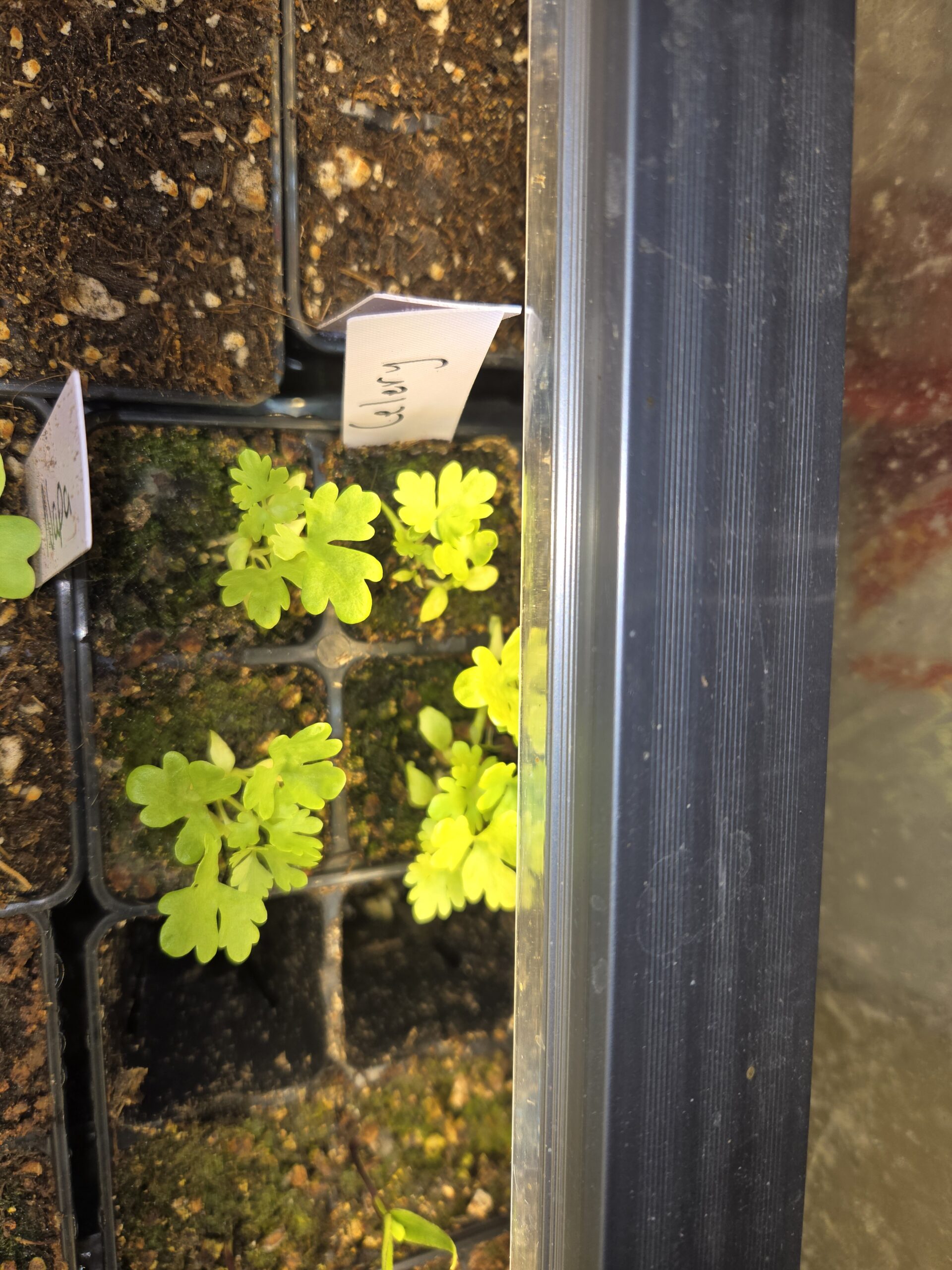
Celery starts slow, but once it gets going, everything changes. This is right around the stage where most people think they messed up.
Struggling to time this stage right? Use the Plant Timeline Calculator to dial it in.
What Happens After Germination 🌞
Once celery sprouts, the goal is consistency.
Steady moisture. Good light. Moderate temperatures. No extreme swings.
Celery doesn’t grow fast early on, but once it establishes, it becomes much more reliable.
This is where patience pays off.
Transplanting Without Stunting Growth 🌤️
Celery can go outside earlier than many warm-season crops, but it still needs to be hardened off.
If you’ve used the timeline calculator, you’ll already know when that window opens.
That removes one of the biggest stress points for beginners—guessing when it’s safe.
The Truth About Growing Celery 🥬
Celery has a reputation for being difficult.
But most of that reputation comes from people starting without a clear system.
When your timing is right and your soil is right, celery stops feeling like a gamble.
It starts feeling repeatable.
Where to Start Today 🚀
If you want to make growing celery easier on yourself, start here:
🌱 Open the Plant Timeline Calculator
🧱 Open the Seed Starting Mix Calculator
Once those two things are dialed in, you’re no longer guessing.
You’re growing with a plan.
How to Grow Cucumber From Seed Using a Simple System (No More Guessing)
How to Grow Cucumber From Seed Using a Simple System (No More Guessing🥒
🗒️Rooted Field Note: 32
There’s something about cucumbers that feels like summer showed up early.
Not tomatoes.
Not peppers.
Cucumbers.
They don’t wait around politely… they explode out of the soil like they’ve got somewhere to be.
And if I’m being honest, I didn’t always get them right.
The first time I tried growing cucumbers from seed, I overwatered them, used the wrong soil, and ended up with leggy little plants that looked like they were asking for help.
Now it’s one of the easiest things I grow.
And most of that came down to one simple shift:
👉 I stopped guessing… and started using my own system.
🧱 Step 1: I Start With the Same Mix Every Time
Before the seeds even come out of the packet, I build my soil.
This is where I think a lot of beginners get tripped up.
They grab whatever bag of mix is sitting at the store and hope it works.
I don’t really do that anymore.
I use my peat-based seed starting mix — the same one from our calculator.
Because once that part is dialed in, everything else gets easier.
- 🌿 Peat moss (or coco coir)
- 🌱 Perlite
- 🪱 Worm castings or compost
But the part that changed things for me was this:
I stopped eyeballing it.
Now I run it through the Seed Starting Mix Calculator and let that tell me how much I need for the containers I’m using.
No wasted materials.
No weird ratios.
No mystery tray of soggy regret.
👉 Try the Seed Starting Mix Calculator here: [Calculator]
🌱 Step 2: How I Plant Cucumber Seeds
Once the mix is ready, the actual planting part is simple.
Cucumber seeds are big, easy to handle, and beginner-friendly.
Here’s what I usually do:
- 📏 Plant them about ½ inch deep
- 🪴 Use bigger cells or small nursery pots
- 🌱 Drop in 1 to 2 seeds per hole
Then I water them in just enough to get everything evenly moist.
Not soaked.
Not muddy.
Just moist enough to wake the seed up.
One thing I learned the hard way is that cucumbers really don’t love having their roots disturbed.
So I don’t start them in tiny little cells anymore unless I absolutely have to.
I either start them in slightly larger containers… or I direct sow them once the weather finally starts acting right.
🌡️ Step 3: Warmth Changes Everything
If you want better germination, warmth matters more than people think.
Cucumber seeds are not in a hurry to sprout in cold soil.
They’ll just sit there. Quietly. Doing nothing.
Once I started paying attention to temperature, my results got much better.
- 🔥 Warm soil helps them germinate faster
- ⏳ Cold soil slows everything down
- 🌱 Warmth gives you stronger, more even starts
That’s why I either start them indoors somewhere warm or wait until outdoor conditions are actually ready instead of planting just because I’m impatient.
🗓️ Step 4: Timing It Right Instead of Guessing
This is one of the biggest mistakes I see with cucumbers.
People plant them too early, then wonder why nothing is happening.
Cucumbers are warm-season plants. They want warmth, not hope.
So instead of guessing, I use the Plant Timeline Calculator.
I plug in my last frost date, choose cucumbers, and it tells me:
- 📅 When to start seeds indoors
- 🌿 When to direct sow
- 🪴 When to transplant outside
That tool removes a lot of beginner confusion fast.
👉 Use the Plant Timeline Calculator here: [Calculator]
☀️ Step 5: Light, Water, and Something to Climb
Once cucumbers sprout, they don’t really mess around.
They grow fast.
Sometimes shockingly fast.
After germination, this is what I focus on:
- ☀️ Plenty of light
- 💧 Consistent moisture
- 🪜 A trellis, fence, or support system
I almost always give my cucumber plants something to climb.
That one move makes a big difference.
The plants stay cleaner, airflow is better, and harvesting is way easier when the fruit isn’t hiding in a jungle on the ground.
🪴 Step 6: Transplanting… or Just Direct Sowing
If I start cucumbers indoors, I try not to baby them too long.
I let them get established, then move them carefully once conditions outside are warm enough.
👉Hardening off guide
But honestly, a lot of the time I prefer direct sowing.
Less transplant stress.
Less root disturbance.
Less fuss.
Sometimes simpler really is better.
🥒 What Changed for Me
Once I switched to using the calculators and stopped doing everything by feel alone, cucumbers got a lot less frustrating.
I had better germination.
Stronger seedlings.
Less wasted soil.
And a much better idea of when I should be doing things.
That was the real shift for me.
Not becoming some perfect gardener.
Just building a system that made it easier to repeat what worked.
🌱 If You’re Brand New, Here’s Where I’d Start
If you’re just learning how to grow cucumber from seed, I’d keep it simple:
- Use a good seed starting mix
- Don’t guess your ratios — use the calculator
- Wait for warmth
- Give the plants light, moisture, and support
That alone will put you way ahead of where most people start.
🌻 Final Rooted Thought
I used to think growing from seed was complicated.
Now I think it’s more about removing friction than chasing perfection.
That’s a big part of why we built these tools in the first place.
Not to make gardening feel more technical… but to make it feel more doable.
So if you’ve been wanting to grow cucumbers from seed but felt a little unsure, start simple.
Use the mix calculator.
Use the timeline tool.
Follow what works.
And let the cucumbers do what cucumbers always seem to do once they’re happy…
Take off running. 🌱🥒
🔗 Helpful Tools From Our Homestead:
Most People Grow Tomatoes the Hard Way… Here’s How to Grow Tomato Plants from Seeds the Way Nature Intended
Most People Grow Tomatoes the Hard Way… Here’s How to Grow Tomato Plants from Seeds the Way Nature Intended 🍅
🗒️Rooted Field Note: 31
If you’re here trying to figure out how to grow tomato plants from seeds, you’re basically standing right next to me in my basement garden.
Every spring the same thing happens around here.
I pull out the seed trays, mix up some soil, and set everything under the grow lights 🌱.
For a few days it looks like nothing is happening. Just trays of dirt sitting quietly.
Then one morning you notice something.
A tiny green hook pushing its way out of the soil.
The first tomato sprout.
The first time my son saw one pop up he leaned over the tray like we had just discovered some new species of plant.
“Dad… it’s alive.”
And honestly… that’s exactly what it feels like.
Because learning how to grow tomato plants from seeds takes something that looks like dust in your hand and turns it into a plant that eventually fills your kitchen with tomatoes. 🍅
Once you watch that transformation happen a couple times, it becomes one of the most satisfying parts of gardening.
Why I Started Growing Tomatoes From Seeds
For years I just bought tomato plants from the garden center.
And there’s nothing wrong with that.
But once I started learning how to grow tomato plants from seeds, I realized something pretty quickly.
The tomato world suddenly gets a lot bigger.
Instead of choosing from the handful of plants on a nursery shelf, you suddenly have hundreds of varieties to pick from.
Cherry tomatoes that taste like candy.
Huge slicing tomatoes for sandwiches.
Strange heirloom varieties that look like they came out of a science lab. 🍅
And the funny thing is… starting them from seed isn’t actually complicated.
You just have to give them a good start.
The Timing Part That Used to Confuse Me
One of the first things people ask when learning how to grow tomato plants from seeds is when to start them.
Tomatoes need a little head start indoors before they go into the garden.
Most gardeners plant seeds about six to eight weeks before the last frost date.
This used to trip me up every year.
Every place has a different frost date, and guessing never felt very scientific.
So eventually I built a small tool that figures it out automatically.
Now I just check the calculator and it tells me when to start my tomato seeds.
It makes life a lot easier.
The Soil I’m Using This Year 🪴
Another big piece of learning how to grow tomato plants from seeds is realizing seedlings don’t like heavy soil.
Garden soil feels logical, but it’s actually too dense for tiny roots.
Seedlings do much better in a lighter mix.
The mix I’m using right now is simple.
Peat moss or coco coir makes up most of it.
Then worm castings add life and nutrients.
A bit of perlite keeps everything loose and breathable.
When you mix it together the soil feels fluffy in your hands.
Almost like crumbly chocolate cake.
That’s exactly what tomato seedlings want.
If you ever want to mix larger batches for trays or containers, the calculator on the site helps figure out the exact amounts.
It saves you from doing bucket math in the garage.
The Moment the Seeds Go In 🌱
Tomato seeds are incredibly small.
The first time you pour them into your hand you almost wonder how something so tiny could ever become a full plant.
Planting them takes about ten seconds.
A small indentation in the soil.
Drop the seed in.
Cover it lightly.
Mist the soil.
And then the waiting begins.
Some gardeners use seed trays with humidity domes.
Others use soil blockers that form little cubes of soil.
Both work great.
What tomato seeds really want is warmth.
That’s why a lot of gardeners slide a small heat mat under the trays 🔥.
It keeps the soil warm and wakes the seeds up faster.
Sometimes the sprouts appear in just a few days.
Tomato Seed Starting Quick Chart 🍅🌱
If you like having the important details in one place, this little tomato seed starting chart makes things easy. This is the kind of thing I wish I had the first few times I tried growing tomatoes from seed.
| What to Know | Helpful Tomato Seed Info |
|---|---|
| Seed depth | Plant tomato seeds about ¼ inch deep. Think of it as giving the seed a light blanket of soil. |
| Soil temperature | 70°F – 80°F is ideal for germination. Tomato seeds sprout fastest in warm soil. |
| Germination time | Usually 5–10 days depending on warmth and moisture. |
| When to start seeds | Typically 6–8 weeks before the last frost date. Use the Planting Timeline Calculator to find the right time in your area. |
| Seed starting mix | Tomatoes prefer a light, airy mix that drains well. Use the Seed Starting Mix Calculator to get the right balance. |
| Light color (Kelvin) | 5000K – 6500K grow lights work best for seedlings. This bright white “daylight” color encourages strong growth. |
| Light hours | Tomato seedlings grow best with about 14–16 hours of light per day. |
| Light distance | Keep lights about 2–4 inches above seedlings. Lights that are too far away cause leggy plants. |
| Watering | Keep soil lightly moist but never soggy. Tomatoes dislike sitting in wet soil. |
| Common beginner mistake | Weak lighting causes leggy seedlings. Strong light close to the plants fixes this. |
🪴 Little homestead note: If you don’t want to guess on the timing or the seed mix, use the calculators above. They make the whole process much easier and save a lot of trial and error.
The Light That Makes the Biggest Difference 💡
Once the seedlings appear, light becomes the most important thing.
A sunny window might look bright to us, but seedlings need stronger light than that.
Without enough light they stretch upward and get thin and floppy.
Gardeners call this getting leggy.
A simple LED grow light placed just a few inches above the plants fixes this immediately.
The stems grow thicker.
The leaves spread wider.
And suddenly those tiny sprouts start looking like real tomato plants.
The Moment They Start Looking Like Tomatoes 🍅
After a few weeks the plants begin to change.
The little round seed leaves give way to the familiar jagged tomato leaves.
The stems thicken.
The plants start reaching confidently toward the light.
This is usually when I move them into slightly bigger containers.
Tomatoes have a strange advantage here.
If you bury the stem deeper when transplanting, the plant actually grows new roots along the buried stem.
More roots means stronger plants later.
The Day They Finally Meet the Garden ☀️
Before tomato plants move outside permanently, they need to get used to outdoor conditions.
This process is called hardening off.
For about a week the plants spend a little more time outside each day.
They slowly adjust to sunlight, wind, and temperature changes.
By the time they finally go into the garden, they’re ready.
And every year the same thought crosses my mind.
All of this… from something smaller than a grain of rice.
Once you understand how to grow tomato plants from seeds, it stops feeling complicated and starts feeling a little magical.
And before long the garden is overflowing with tomatoes. 🍅🍅🍅
Tools From the Homestead 🧰
If you’re starting tomatoes this year, these tools help a lot.
Quick Questions Gardeners Ask
How long does it take to grow tomato plants from seeds?
Tomato seeds usually germinate within 5–10 days and are ready to transplant outdoors after about 6–8 weeks.
Do tomato seeds need heat to germinate?
They germinate best when soil temperatures stay between 70–80°F.
Can you grow tomatoes from store-bought seeds?
Yes. Seeds from many tomatoes will grow, although heirloom varieties produce the most reliable results.
🪴 Dig deeper into this Rooted Field Note and explore more tools from the homestead.
How to Grow a Pepper Plant from Seed (My Basement Seed-Starting Setup That Actually Works)
How to Grow a Pepper Plant from Seed🌶️ (My Basement Seed-Starting Setup That Actually Works)
🗒️Rooted Field Note: 30
A Quick Note Before We Go Further 🌶️
This Rooted Field Note starts in my basement, where the pepper seeds are waking up under lights.
That’s where every pepper plant’s story begins. But we’re not stopping there.
Once those seedlings leave the trays and step into the garden, we’ll follow the rest of the plant’s life too — from transplanting to flowers to the moment you finally harvest your first pepper.
So if it feels like the seed-starting section wraps up early, keep reading. The rest of the pepper plant’s journey is waiting just a little further down.
The Quiet Moment When a Pepper Seed Wakes Up 🌱
There’s a strange little moment that happens when you grow a pepper plant from seed.
At first… nothing.
You fill the trays.
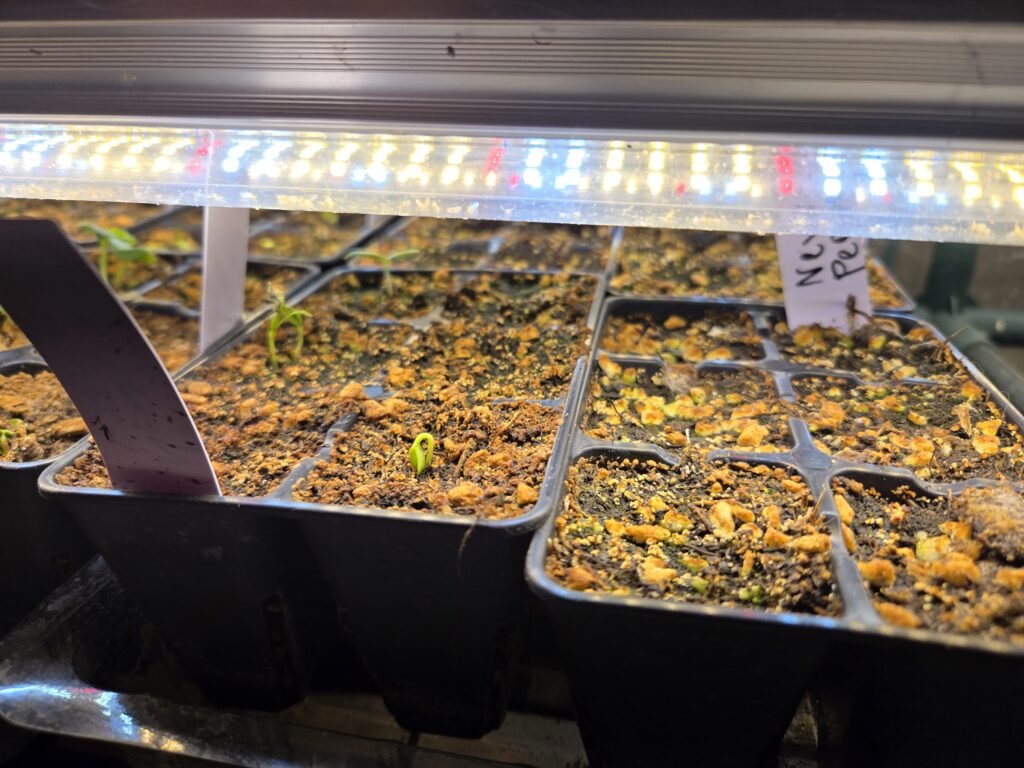
Pepper seed germinating from soil
You plant the seeds.
You water the soil.
And then for several days, it just looks like a tray of dirt sitting under lights.
If you’re anything like me, you check it more often than you should. 😄
But one morning you walk by, and something is different.
A tiny green hook is pushing its way up through the soil.
That tiny sprout doesn’t look like much yet, but that little plant is the beginning of something real. Maybe it turns into jalapeños for salsa. Maybe it becomes sweet bell peppers for dinner. Maybe it ends up being the hottest pepper you’ve ever grown.
Every pepper plant starts exactly the same way — a seed waking up underground.
And after growing peppers this way for a while, I’ve learned something simple.
Pepper seeds don’t need complicated systems.
They just need the right environment early on.
That’s what I’ve been building down in my basement this season.
The Seed Starting Mix I Actually Use 🪴
One of the first mistakes I made when I started growing peppers was using regular garden soil to start seeds.
It packed down too much.
It stayed wet too long.
And the seeds struggled.
Pepper seeds really want something lighter and airy around their roots.
So the mix I’m using now is the peat-based seed starting mix we built into the seed-starting calculator.
Instead of trying to memorize ratios or scoop ingredients every time I start seeds, I just let the calculator build the mix for me depending on how many trays I’m starting.
It keeps everything consistent.
And consistency is one of the biggest secrets to growing strong seedlings.
The mix itself uses materials that hold moisture, allow airflow around roots, and give seedlings a gentle start without suffocating them.
But instead of listing exact measurements here, I’d much rather you use the calculator so it builds the mix for your trays, your containers, and the amount of seedlings you’re starting.
👉 Seed Starting Mix Calculator
That’s the exact mix the pepper seedlings in my basement are growing in right now.
Why My Pepper Seeds Are Growing in a Basement 🏡
Most people picture seed starting happening in a sunny kitchen window.
Mine happens in an unfinished basement.
Which honestly sounds worse than it is.
The room stays cool down there, and that’s actually where peppers taught me one of my first real lessons.
Peppers really don’t like cold soil.
The first year I tried starting them down there, the seeds just sat in the trays forever doing absolutely nothing.
Now those trays sit on a seed-starting heat mat with a thermostat underneath them.
That warmth tells the seeds it’s spring.
Instead of waiting weeks wondering if anything will sprout, the seeds start waking up much faster.
Because the basement itself still runs cool, I also added a small space heater in the room. Not blasting heat — just enough to keep the environment a little friendlier for seedlings.
Sometimes gardening improvements are surprisingly simple.
Just solving small problems one at a time.
The Light Setup That Changed Everything 💡
For a long time I believed what a lot of beginner guides say.
“Just put your seedlings in a sunny window.”
But peppers have other plans.
Seedlings stretch toward light like little antennas. If the light isn’t strong enough, they grow tall and thin trying to reach it.
Gardeners call those leggy seedlings, and they usually fall over later.
The fix turned out to be incredibly simple.
The peppers under my lights right now are growing beneath basic shop lights — the same ones linked in the seed starting calculator.
Nothing fancy.
Just bright light hanging close enough that the plants don’t have to stretch.
Once I switched to that setup, the seedlings completely changed.
Instead of skinny stems, they started growing thick and sturdy.
Sometimes the simplest tools are the best ones.
When to Actually Start Pepper Seeds 📅
One thing that really helps is knowing when to start your seeds.
Start too late, and peppers don’t get enough growing time.
Start too early, and you end up with giant plants inside your house.
So instead of guessing, we built a tool that calculates the timing automatically based on your location.
👉 Seed Starting Time Calculator
It figures out when you should start seeds based on frost dates and growing seasons, so you don’t have to play the guessing game.
I still check it myself every season.
Moving Peppers Outside 🌞
Eventually, those little plants outgrow the trays.
That’s when the garden starts calling them outside.
But peppers like warm nights and warm soil before they really begin growing.
Plant them too early and they just sit there… waiting for summer.
So I usually wait until the weather feels like real warmth has settled in.
Once peppers hit warm soil, though, something shifts.
They start growing fast.
The tiny seedlings from the basement suddenly become full pepper plants producing fruit.
That transformation never stops being fascinating.
The First Pepper From a Plant You Grew Yourself 🌶️
Harvesting the first pepper from a plant you started from seed feels different.
You remember planting the seed.
You remember checking the tray every morning.
And suddenly that tiny plant is producing food.
It’s one of those quiet moments gardening gives you.
A reminder that a little soil, a little light, and a little patience can turn into something real.
One Small Favor From a Fellow Gardener 🌱
If this Rooted Field Note helped you or made seed starting feel a little easier, feel free to share it with someone who’s trying to grow peppers this year.
Gardening spreads best when neighbors help neighbors.
And if you’re experimenting with peppers yourself, I’d genuinely love to hear about it.
What varieties are you growing this year?
Are you starting them indoors or direct sowing later?
You can drop a comment below — I read every one of them and it helps everyone here learn from each other.
If you’d like to go a little deeper into this stuff, we also have a small community where we share experiments, tools, and what’s actually working in our gardens each season.
Nothing fancy — just gardeners helping gardeners figure things out together.
👉 Sprouting Homestead Community (Skool)
Whether you join us there or just keep reading the Field Notes here, I’m glad you stopped by.
That’s really what this whole project is about.
Just people learning to grow things together. 🌱
What Happens After Pepper Seedlings Leave the Basement 🌞🌶️
Once the seedlings outgrow their trays and the weather starts cooperating, the next chapter of the pepper plant’s life begins.
This is the moment where those tiny basement plants officially become garden plants.
But peppers are a little dramatic about temperature.
They don’t really want to move outside until the world feels warm enough. Cool nights can make them stall out and just sit there doing nothing for weeks.
So before planting them in the garden, I let them slowly adjust to outdoor life. This process is called hardening off, and it simply means giving the plants a little sunlight and outdoor air each day before the full transplant.
Think of it like sending a kid outside without a jacket for the first warm day of spring.
At first it feels shocking.
Then suddenly it feels normal.
After about a week of that gradual exposure, the plants are usually ready to move into their final home.
Where Pepper Plants Like to Grow 🪴
Peppers are surprisingly flexible once they get past the seedling stage.
Some gardeners plant them directly in garden beds.
Others grow incredible plants in containers.
I’ve had great success using 5-gallon buckets filled with rich soil and compost. Containers warm up quickly in the sun, and peppers absolutely love warm roots.
The biggest thing peppers want is simple:
Warm soil
Good drainage
Consistent watering
Once they have that, they mostly focus on doing what they were built to do.
Grow peppers.
The Season Where Pepper Plants Really Take Off 🌿
For the first few weeks after transplanting, pepper plants tend to grow slowly.
Then suddenly something changes.
The weather warms up.
The soil warms up.
And the plant seems to flip a switch.
New leaves appear quickly.
Branches start forming.
Little white flowers begin showing up.
Those flowers are where the real magic happens.
Each one has the potential to become a pepper.
Watching that transformation from flower to fruit is one of the most satisfying parts of gardening.
When Pepper Plants Start Producing 🌶️
Eventually the flowers turn into tiny peppers.
At first they look almost comically small.
But day by day they grow larger until suddenly you’re harvesting real peppers from a plant that started as a tiny seed in a tray.
That moment never gets old.
Especially when you remember where the plant started.
A little seed.
A basement tray.
A few shop lights and some warm soil.
Harvesting Peppers (And Encouraging More Fruit)
One of the easiest ways to keep pepper plants producing is simply to harvest regularly.
The more peppers you pick, the more the plant tends to keep producing.
Some peppers are harvested green.
Others are left on the plant to ripen into red, yellow, or orange.
Both are perfectly fine.
In fact, the flavor usually gets sweeter as peppers fully ripen on the plant.
The Full Journey of a Pepper Plant 🌱➡️🌶️
Looking back, it’s kind of amazing how simple the whole process is.
A pepper plant’s life usually follows the same quiet rhythm every season:
Seed planted in warm soil 🌱
Seedling growing under lights 💡
Plant transplanted into the garden 🌿
Flowers forming 🌼
Peppers growing 🌶️
And before long you’re standing in the garden holding food that started as a tiny seed.
That transformation never really stops feeling magical.
A Small Invitation From the Garden 🌱
If this Rooted Field Note helped you feel more confident about growing peppers from seed, feel free to share it with someone else who’s thinking about starting a garden this year.
Gardening spreads best when neighbors share what they’re learning.
And if you’re growing peppers yourself, I’d honestly love to hear about it.
What varieties are you planting this year?
Are they growing in beds or containers?
You can leave a comment below and tell me how things are going in your garden.
If you’d like to dive deeper into seed starting and the tools we’ve built for gardeners, you’re also welcome to join the Sprouting Homestead community.
👉 Join the Sprouting Homestead Community
No pressure — just gardeners learning together and sharing what’s working.
Helpful Tools Mentioned in This Rooted Field Note
🌱 Seed Starting Mix Calculator
Plant Timeline Calculator
❄️ Don’t know your last frost date?
No problem — it only takes about 10 seconds to find it.
- Open the frost date tool below
- Type your ZIP code
- Look for “Last Spring Frost”
- Enter that date into the calculator on this page
This opens in a new tab so you can quickly come back and use the calculator.
🌿 Plant Timeline Calculator
Pick what you’re growing, enter your Last Frost Date, and get your seed-start window 🗓️🌱
📩 Want Your Planting Dates Saved?
I’ll send you the planting guide, seed-starting reminders, and a shortcut back to the recommended tools.