🌱 How to Start a Raised Garden Bed in Cold Climates (The Way We Really Did It)
🗒️Rooted Field Note: 28
Neighbor… starting a raised garden bed in a cold climate hits differently. It isn’t like building one in some warm Zone 9 dreamscape. Out here, fall feels like a countdown, and winter shows up early to remind you who’s in charge. ❄️
But maybe that’s why the memory of starting ours feels so sharp — because we weren’t waiting for perfect conditions. It was just me, my son, and the quiet knowing that if we wanted to grow something real, we had to begin right then… in the cold, in the wind, in the middle of falling leaves. 🌬️🍂
I still remember walking the yard with him, watching where the shadows fell, trying to find that one sunny patch that could give our plants a fighting chance. When we finally found it — flat enough, bright enough, close enough to water — I didn’t dig. I dropped cardboard. Big, beaten-up, tape-free pieces of cardboard that looked like nothing… until we laid them down like a foundation for a new life. 📦➡️🌱
When we dumped compost over the top, the steam rising from it carried this earthy, hopeful smell. There’s something about cold air mixed with warm compost that hits your chest in a way you don’t forget. My son stood there, hands stuffed in his hoodie pocket, watching like I was performing some kind of magic trick, while the first bed slowly took shape in the chill of the day.
We spread woodchips around the outside of the bed, just enough to make real paths — not muddy, not slippery, just solid footing that would keep us out of the muck when snow melted or rain soaked the yard. In that moment, the space shifted from “random section of grass” to “this is our garden now.” The bed in the middle, paths all around, everything starting to look like it actually belonged there.
Cardboard, Compost, Leaves & Cold Air
The part that still grabs me happened when we fired up the mower. The trees had dropped almost everything by then, and we ran over those leaves until they turned into tiny pieces of mulch. The sound of the mower chewing through them, the smell of that shredded leaf dust swirling in the cold air… it felt like fall itself was helping us. 🍁
We took those mower-mulched leaves and spread them across the top of the beds only — never on the paths — covering the soil the way you tuck a kid into bed at night. That leaf blanket was our secret weapon. It protects the beds all winter, feeds them slowly as it breaks down, and helps them wake up early in spring when the rest of the yard still feels half asleep.
That’s when the urge to plant something hit me, right there in the cold. So we grabbed garlic bulbs and pressed each clove deep into the soil — root side down, tip reaching up like a tiny prayer. 🧄 Garlic is the kind of crop that loves cold climates, the kind that settles in quietly while the rest of the garden goes dormant, then explodes with life when the days finally warm.
We also planted saffron bulbs — tiny crocus corms I held in my hands like treasure. Soft, delicate, and worth more than gold per ounce, they felt almost too fragile for our brutal winters. My son helped bury the bulbs under a thin layer of compost, and the two of us covered them gently with leaf mulch. The thought of purple crocus flowers pushing through next fall made the cold feel almost kind. 🌸
We even planted a handful of fall seeds — the kind meant to sleep under snow and crack open when spring finally decides to give us a break. Planting into cold soil like that feels like writing a letter to your future self. A quiet message that says, “We believed. Even here. Even now.”
Raised Beds That Fight for You in a Short Season
Out here, raised beds aren’t a cute gardening trend; they’re a survival tactic. The soil inside them warms up earlier than the ground around them. It drains better when thaw and rain compete to turn everything into a swamp. It lets you plant sooner, harvest sooner, and actually get a full season out of a place that loves to steal weeks from you with late frosts and early freezes.
When the snow finally buries everything, I know what’s happening underneath. The leaves are breaking down into new soil. Garlic is rooting deeper. Saffron is sleeping. Seeds are waiting for their moment. And that morning in spring — when you peel back the leaf mulch and find soft, dark, workable soil underneath — that moment is enough to keep you going through the hardest winters. 🌱❄️
The Tools That Don’t Quit in Cold Soil
I learned pretty quickly that not every tool is built for cold-climate work. I’ve had a cheap trowel snap clean in half in half-frozen soil, and nothing humbles you faster than standing there with a broken handle in your hand while the ground laughs at you. These days I grab the tools that have already proved themselves out there.
A solid garden fork is the first one I reach for — the kind that sinks into compacted soil and actually lifts it instead of bending. A sturdy hand trowel that feels like an extension of my arm lives in the bed with me while I tuck bulbs in and dig small holes for transplants. My pruners need to be sharp enough to make clean cuts through woody stems, even when my fingers are cold and clumsy. And the wheelbarrow has quietly become one of the heroes of this story, hauling compost, woodchips, and even the long logs we dragged home when we decided to build our second bed from free park firewood.
Those logs turned into our log-framed bed — rough, uneven, and absolutely perfect. We rolled them into place, set them into a rectangle, and the whole thing felt more ancient and more “homestead” than any store-bought kit ever could. Inside that log frame, we followed the same pattern: cardboard down first, then compost and soil on top, and finally that familiar blanket of shredded leaves. The paths around it stayed woodchips, crunching under our boots in every season.
Why This Matters More Than Just Vegetables
When I step back and look at those beds now, I don’t just see spots to grow food. I see the decision not to wait for perfect. I see cold fingers and warm compost. I see my son watching garlic cloves disappear and asking when they’ll come back. I see faith, layered in cardboard and compost and leaves, sitting quietly under the snow until its time comes.
And that’s why this isn’t just “how to start a raised bed.” It’s how to start rooting yourself into a place that doesn’t always make it easy. It’s how to say, “We’re staying. We’re building. We’re growing anyway,” even when the frost on the window says otherwise.
Growing Together: The Skool Community
👉 Join Here: https://sproutinghomestead.com/join/sproutingrootedrecipes/
I wish I’d had more people to talk to when I started this — people who understood what it feels like to plant garlic with numb fingers, to mulch with shredded leaves, to build raised beds out of free logs, to tuck saffron bulbs into cold compost and hope. That’s a big part of why the Sprouting Homestead Skool community exists now.
It’s not about showing off perfect gardens. It’s about gathering the ones who get it: gardeners, beginners, tired parents, people who want to grow real food in places where winter hangs on too long. It’s a spot where we can swap stories, compare what works in short seasons, talk about the tools that don’t give up, and remind each other that we’re not doing this alone.
You’re not behind. You’re not crazy for starting a raised bed when the world feels like it’s shutting down for the year. You’re just early in the story. And this little rectangle of soil you’re planning? It’s not just a garden bed. It’s a promise — to yourself, to your family, and maybe to a future season you can’t see yet.
This is how we started our raised garden beds in the cold. This is how you can start yours. And when you do, you’ll have more than compost and cardboard and leaves on your side. You’ll have a whole community of Rooted folks walking this out with you. ❤️🌱
👉 Join Here: https://sproutinghomestead.com/join/sproutingrootedrecipes/
🪴 Coming Soon from Sprouting Homestead
• Cold-Climate Garlic Growing Field Note | • Saffron on the Homestead: Tiny Flowers, Big Flavor | • Raised Bed Soil Mix Calculator | • Preparing Your Bed For Winter
🌾 Join Us in the Skool Garden Community
If you’re standing where I stood — cardboard in one hand, garlic in the other, wondering if any of this will actually work in your climate — you’re exactly who we built the Sprouting Homestead Skool community for. When you’re ready, come pull up a virtual chair, share your first bed, and grow alongside the rest of us trying to root ourselves into something real.
Categories
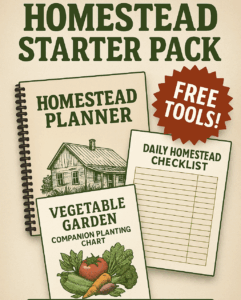
- ✅ Custom Planting Timeline by ZIP Code Never miss a planting window again—get a schedule tailored to your local frost dates.
- ✅ Seedling Checklist & Prep Guide Get your garden babies off to the best start with our printable, foolproof seed-starting guide.
- ✅ Compost & Fertilizer Calculator Mix it right the first time—use our tool to balance browns, greens, and amendments for thriving plants.